The monochrome bedroom isn’t just about painting walls; it’s about composition, contrast, and the deliberate use of texture to engage the senses. In the world of design, black is the grounding force, and white is the canvas and the light. By mastering the ratio and the materials, you create a space that is both minimalist and rich with visual interest.
Achieving Warmth in Contrast
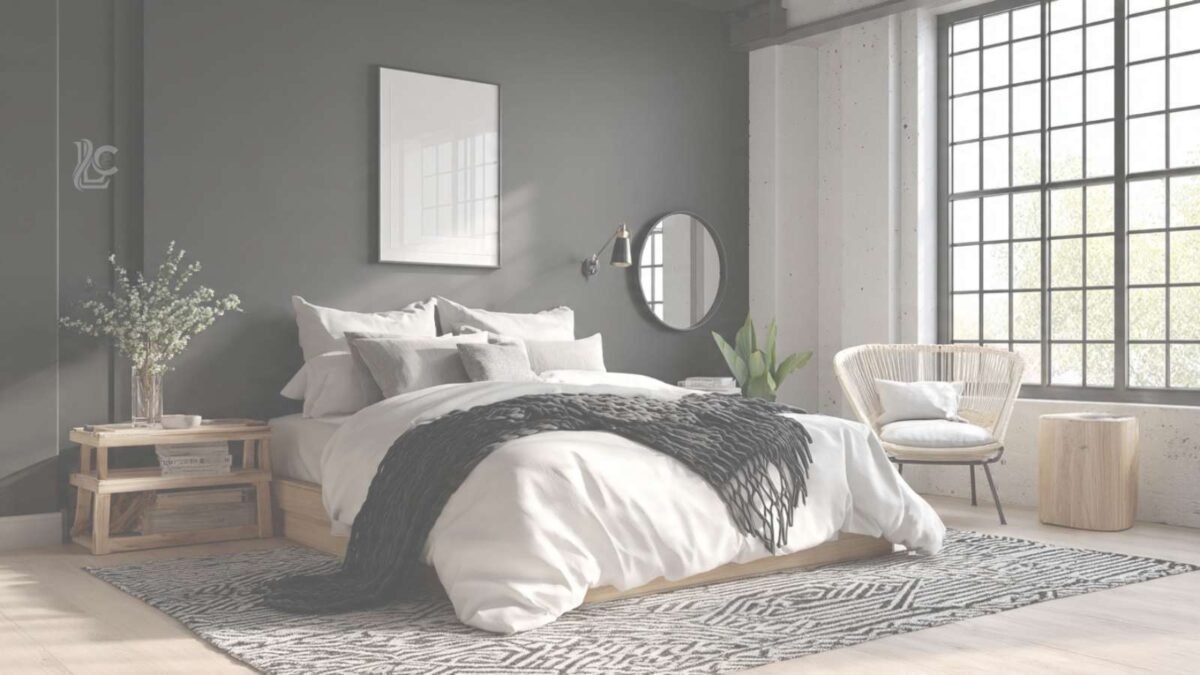
Relatable Journey: When I first tried this look, I painted one wall true black and the rest bright white. It looked incredibly stark, almost clinical. My Personal Win: I realized I needed to shift my colors: use a soft, warm white (like cream or bone) instead of stark white, and introduce warmth through medium-toned wood and soft brass metals. This simple change made the entire room feel immediately cozy.
Actionable Content: The Ratio Rule
- The 70/30 Rule: For a serene space, aim for 70% White/Soft Neutral (walls, primary bedding) and 30% Black/Dark Contrast (furniture, lamps, throws, art). This keeps the room feeling bright and open.
- The Power of Texture: To prevent flatness, combine at least three textures on the bed: smooth cotton sheets, a nubby wool throw, and soft velvet pillows. This detail is crucial for high-end styling.
10 Black and White Bedroom Concepts
1. The High-Contrast Architect
- The Look: This is a bold, gallery-inspired aesthetic defined by sharp, clean lines and defined edges.
- Key Elements:
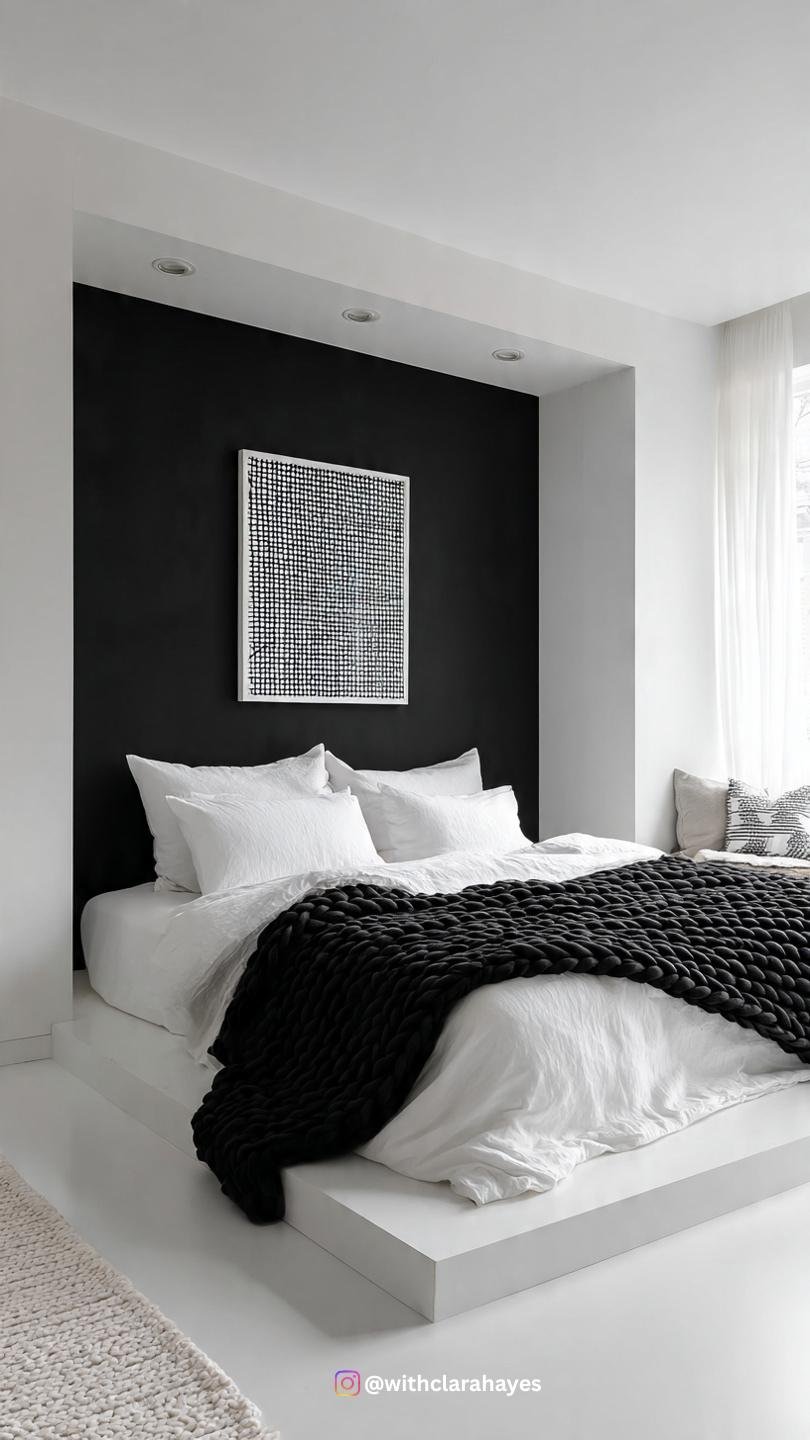
- Walls: Stark white walls and ceiling.
- The Focus: A black accent wall behind the bed (painted matte black or finished in black wallpaper with a geometric pattern).
- Furniture: A simple, low-slung platform bed frame in matte black metal or wood. Floating white nightstands.
- Textural Details: Bedding should be mostly white, but incorporate a large, chunky knit black throw draped across the foot of the bed. Use a large, black and white abstract geometric print as the primary art piece.
- Styling Insight: The purpose is to draw the eye directly to the bed. The sharp contrast of the white sheets against the black wall creates dramatic, beautiful depth.
2. Soft Scandi Simplicity
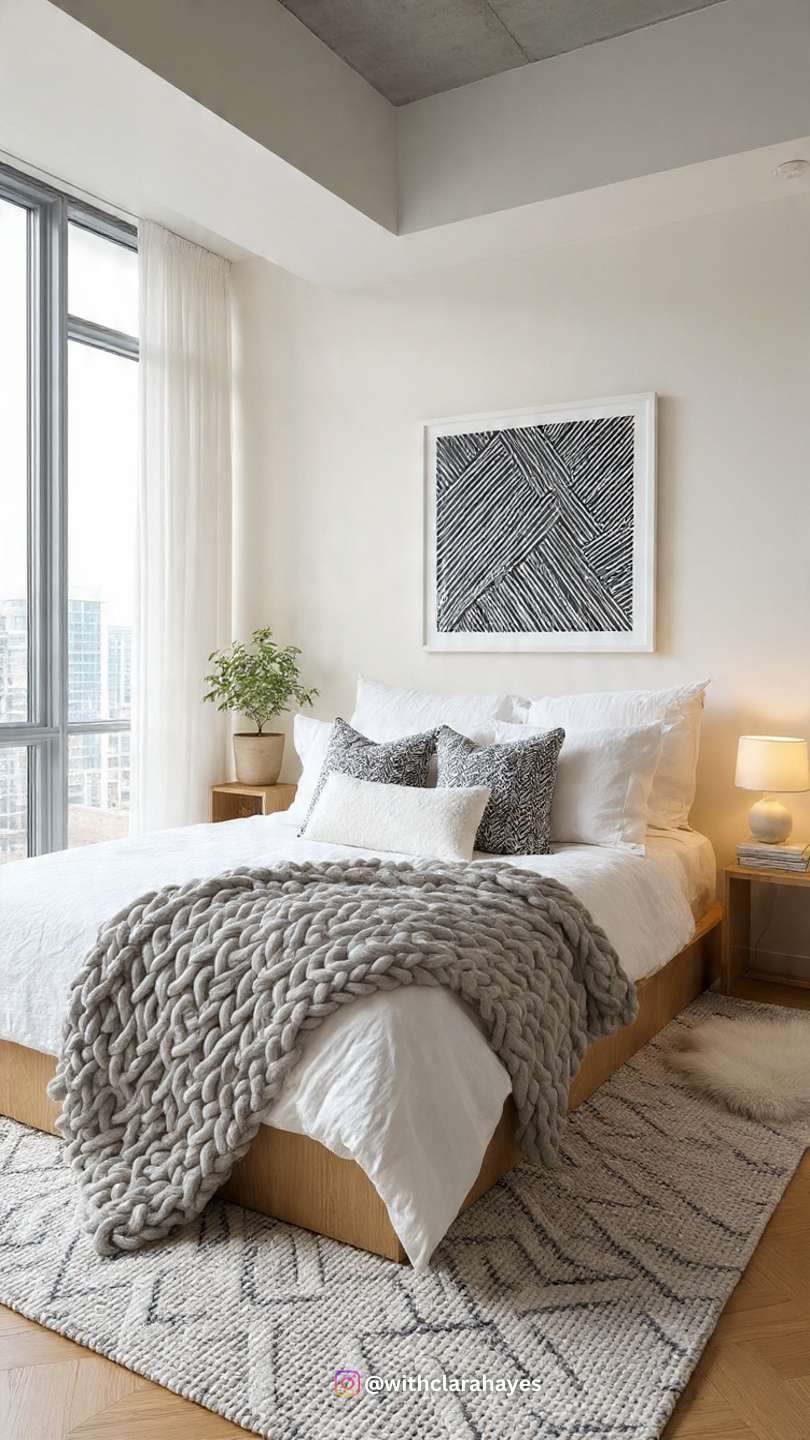
- The Look: Monochrome meets Hygge—focused on natural materials and high-texture coziness, preventing any feeling of harshness.
- Key Elements:
- Walls: Warm, off-white paint (think bone or cream).
- Contrast: Introduce black primarily through textiles and soft decor.
- Furniture: Light, natural wood furniture (e.g., bleached oak or birch) for the bedside tables and dresser.
- Textural Details: Use a large, patterned area rug (think black and white subtle chevron or stripe) that covers most of the floor. Layer the bed with linen duvet covers in cream and add several black and white patterned cushions (e.g., ticking stripe or subtle polka dot).
- Sensory Description: The soft, yielding texture of a sheepskin rug placed next to the bed offers a delightful tactile counterpoint to the crisp linen sheets.
3. The Parisian Chic Grid
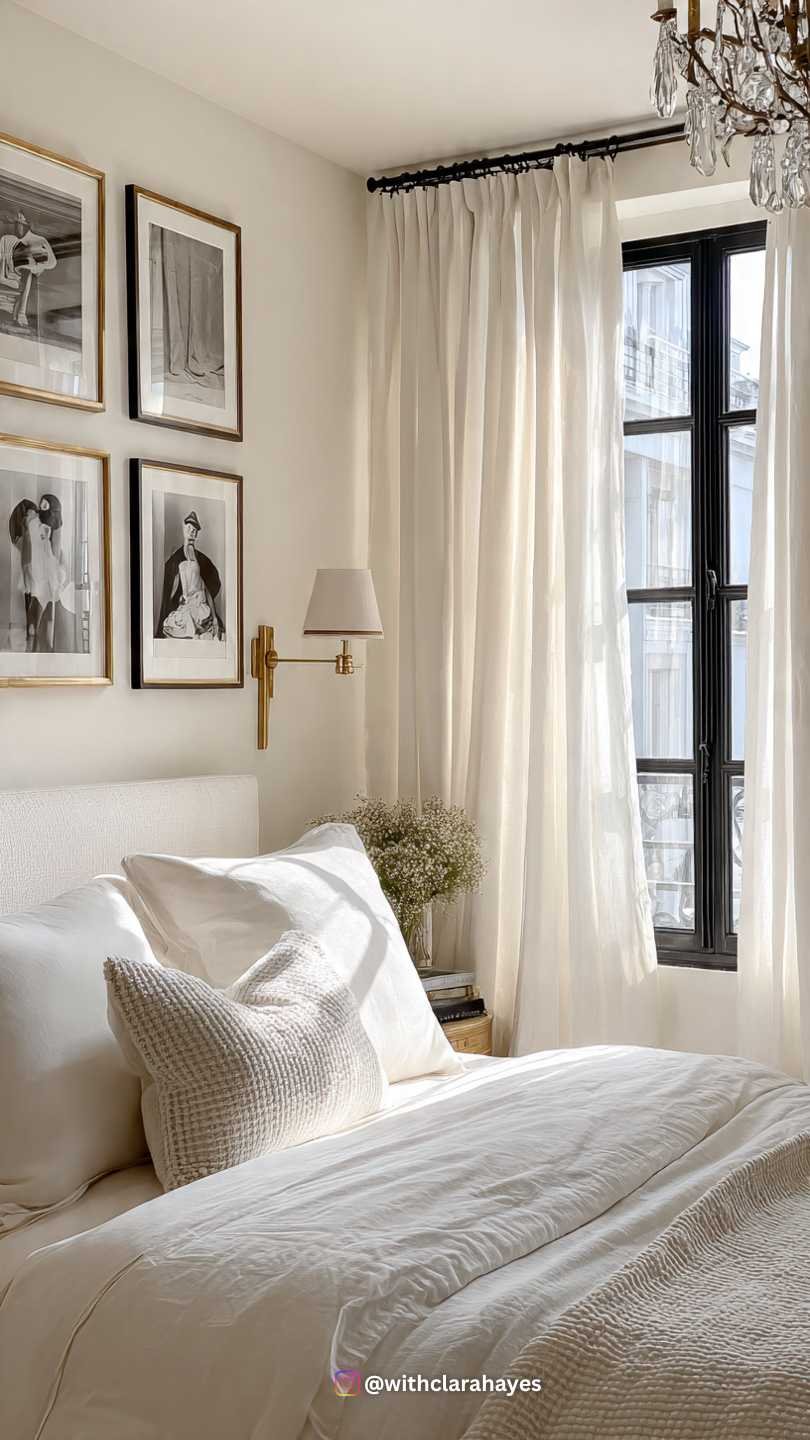
- The Look: Elegant, timeless, and slightly feminine, reminiscent of classic French interiors.
- Key Elements:
- The Pattern: Introduce a structured grid or check pattern. This can be achieved with black window frames, or by using large, framed black and white fashion photography.
- Furniture: A classic headboard, perhaps upholstered in white linen or a textured tweed.
- Metals: Subtle accents of polished brass or warm gold in lamp bases and mirror frames.
- Styling Insight: Use floor-to-ceiling curtains in sheer white or cream to soften the strong lines of the black frame. A simple, ornate chandelier (even a small one) in black or crystal adds an element of romance.
4. Industrial Loft Edge
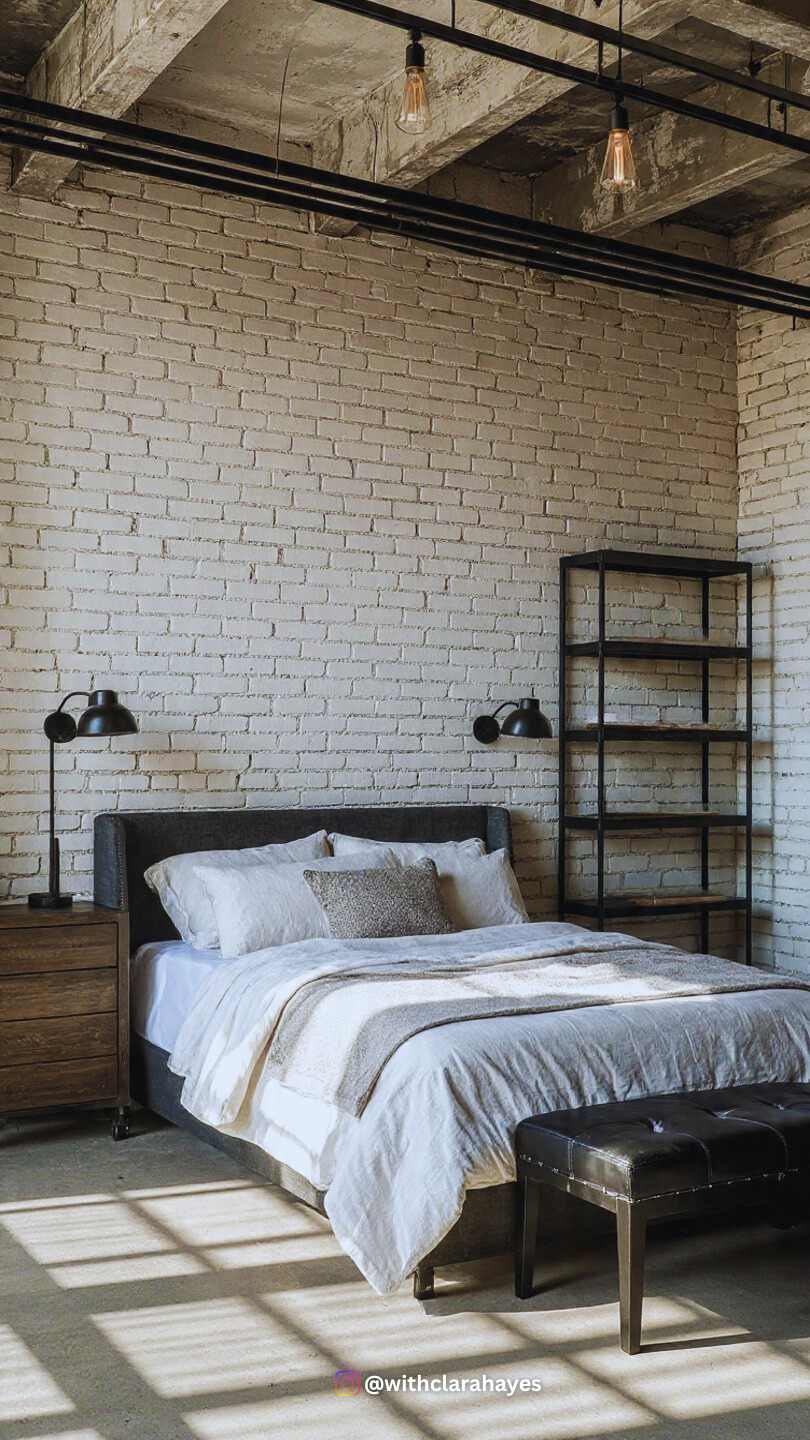
- The Look: Raw materials and high contrast, perfect for rooms with high ceilings or exposed elements.
- Key Elements:
- Walls: If possible, expose a brick wall and paint it matte white, allowing the texture to show through. Alternatively, use a textured wallpaper that mimics raw concrete.
- Contrast: Black dominates the non-textile elements. Use black industrial-style lighting fixtures (exposed bulbs) and a black metal shelving unit.
- Furniture: A rustic, dark-stained wood dresser or nightstand.
- Textural Details: Bedding should be simple white or grey. Introduce heavy black leather in a bench or an armchair for a powerful, grounded feel.
5. The Art Deco Graphic
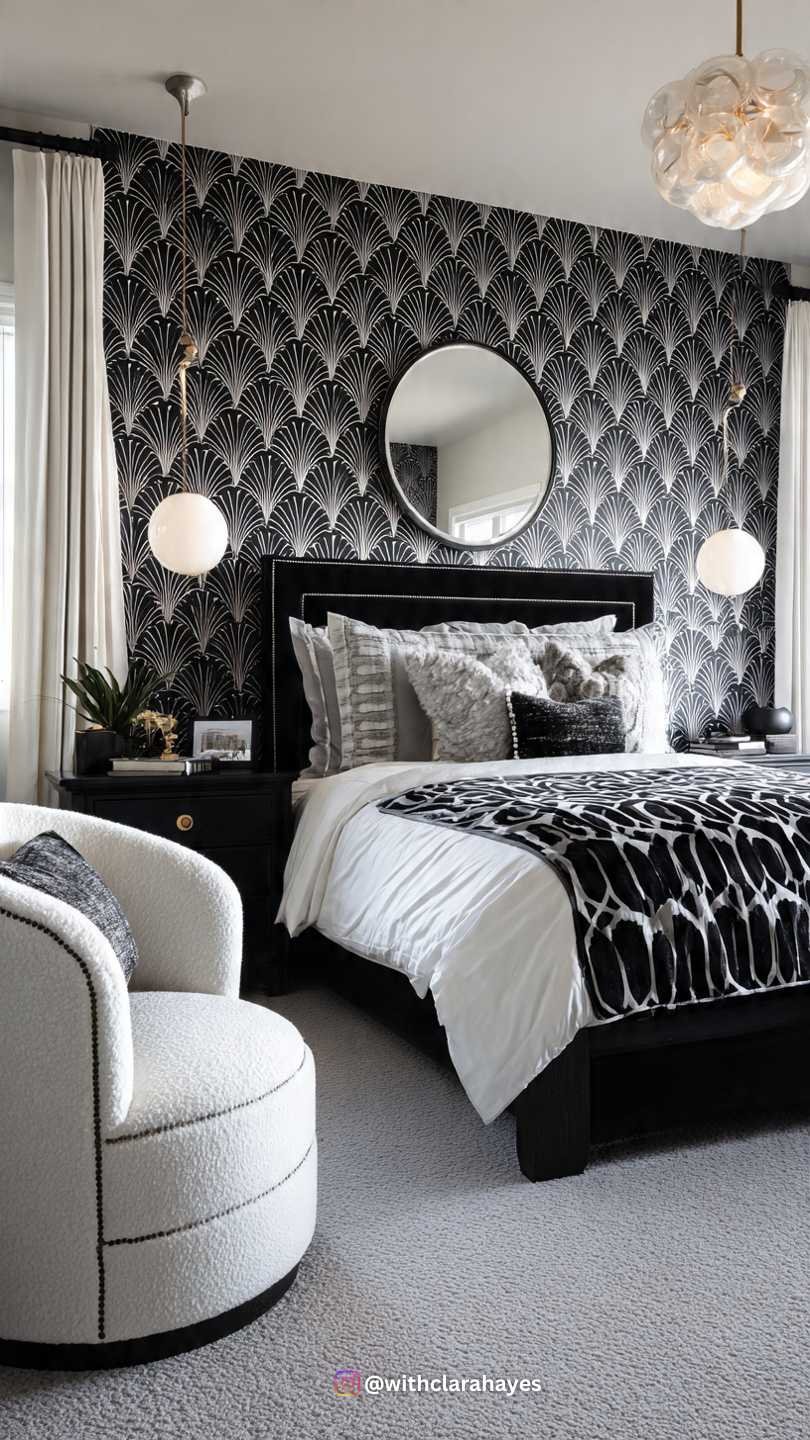
- The Look: Bold, sophisticated, and symmetrical, leveraging striking geometric patterns.
- Key Elements:
- The Pattern: Use a striking, high-contrast wallpaper on the primary wall (think fan, scallop, or a high-contrast chevron pattern).
- Metals: Accent with chrome or nickel for a cool, sleek 1920s feel.
- Lighting: Symmetrical wall sconces on either side of the bed with spherical white glass shades.
- Styling Insight: Choose furniture with curved lines (a round mirror, an upholstered velvet chair) to soften the hard edges of the geometric patterns. The symmetry is key—matching nightstands and lamps are non-negotiable.
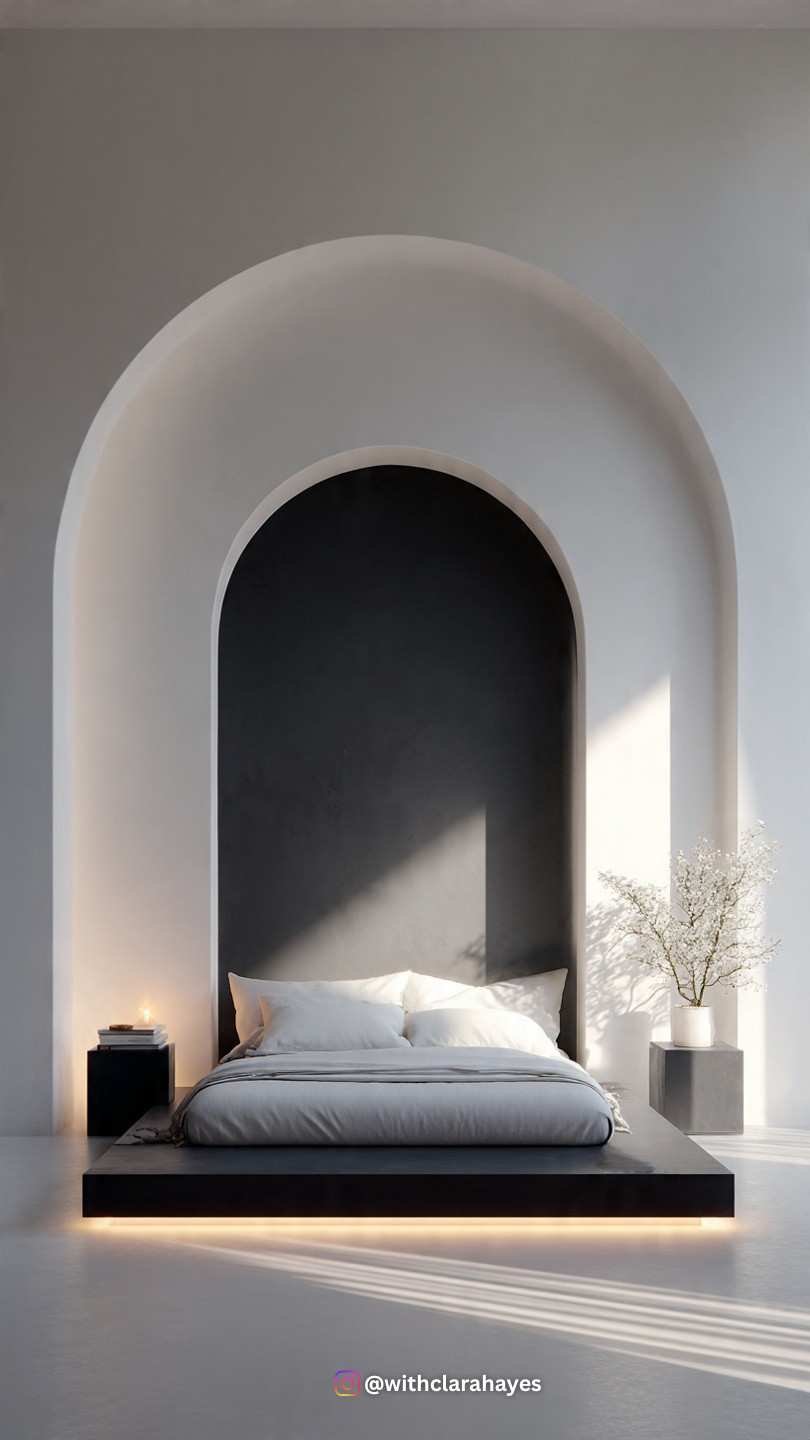
6. Minimalist Zoning with Paint
- The Look: Achieving sophisticated definition using only paint and light.
- Key Elements:
- The Wall Treatment: Create a large, thick band or painted arch in black behind the bed, leaving the rest of the walls white. This acts as a graphic, oversized “headboard.”
- Furniture: Extremely streamlined and minimal (a simple bed frame and low, boxy nightstands).
- Actionable Content: Install subtle LED strip lighting behind the painted arch or under the bed to create a soft, upward glow that highlights the contrast at night.
7. Warm White and Woven Black
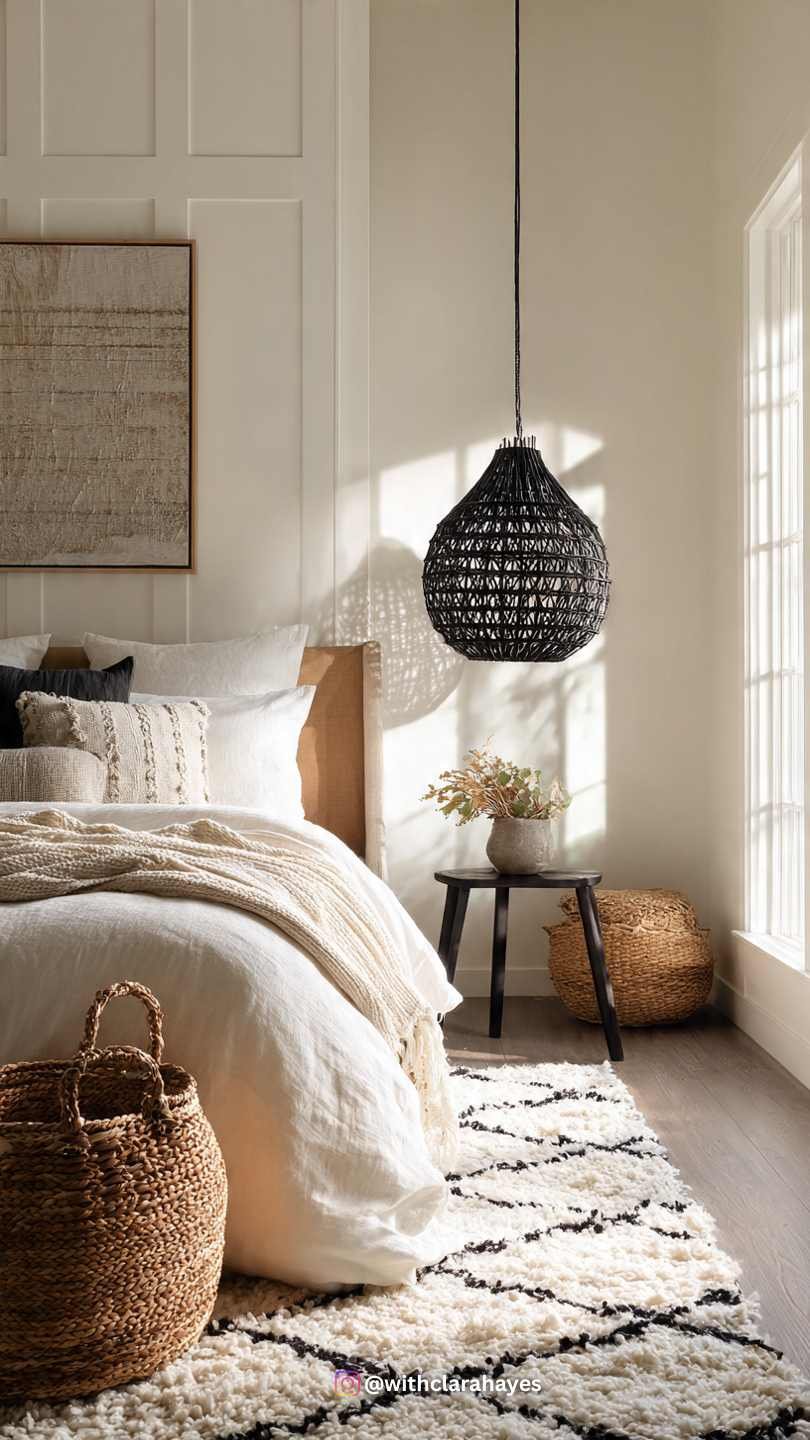
- The Look: Focusing on the white base and using black as a delicate, woven accent.
- Key Elements:
- Walls & Floor: All white/cream, light-toned wood.
- Black Accent: Introduce black via woven materials—a black rattan pendant light, a black and white Moroccan shag rug with a visible weave, or woven baskets.
- Furniture: Mid-century modern style, incorporating tapered legs and simple silhouettes.
- Sensory Description: The visual warmth of the woven patterns prevents the black from feeling flat, making the room feel grounded and textural.
8. The Dramatic Moody Escape
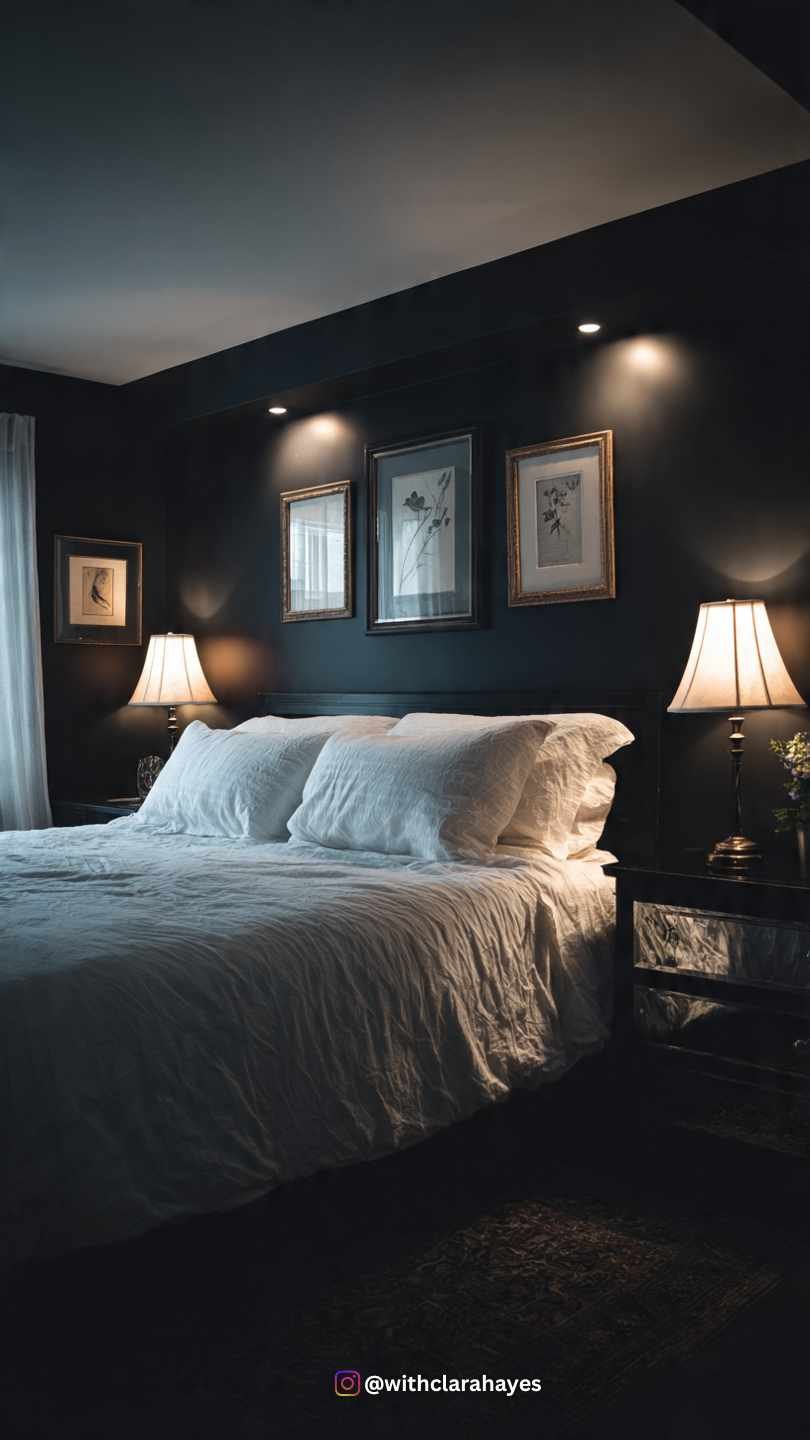
- The Look: Inverting the ratio to create an intimate, cocoon-like atmosphere.
- Key Elements:
- Walls: Paint all four walls in a deep, dark charcoal grey or black.
- Contrast: White is used for contrast only on the ceiling, trim, and bedding.
- Lighting: Absolutely crucial here. Use multiple layers: bedside lamps, low ambient light, and spot lighting focused on art or plants. Avoid harsh overhead fixtures.
- Styling Insight: The dark walls look incredible with mirrored furniture (like mirrored nightstands) as they reflect the light and break up the darkness. Use large, bright white matting on framed art to make the pieces pop dramatically off the dark wall.
9. Pattern Play: Stripes and Polka Dots
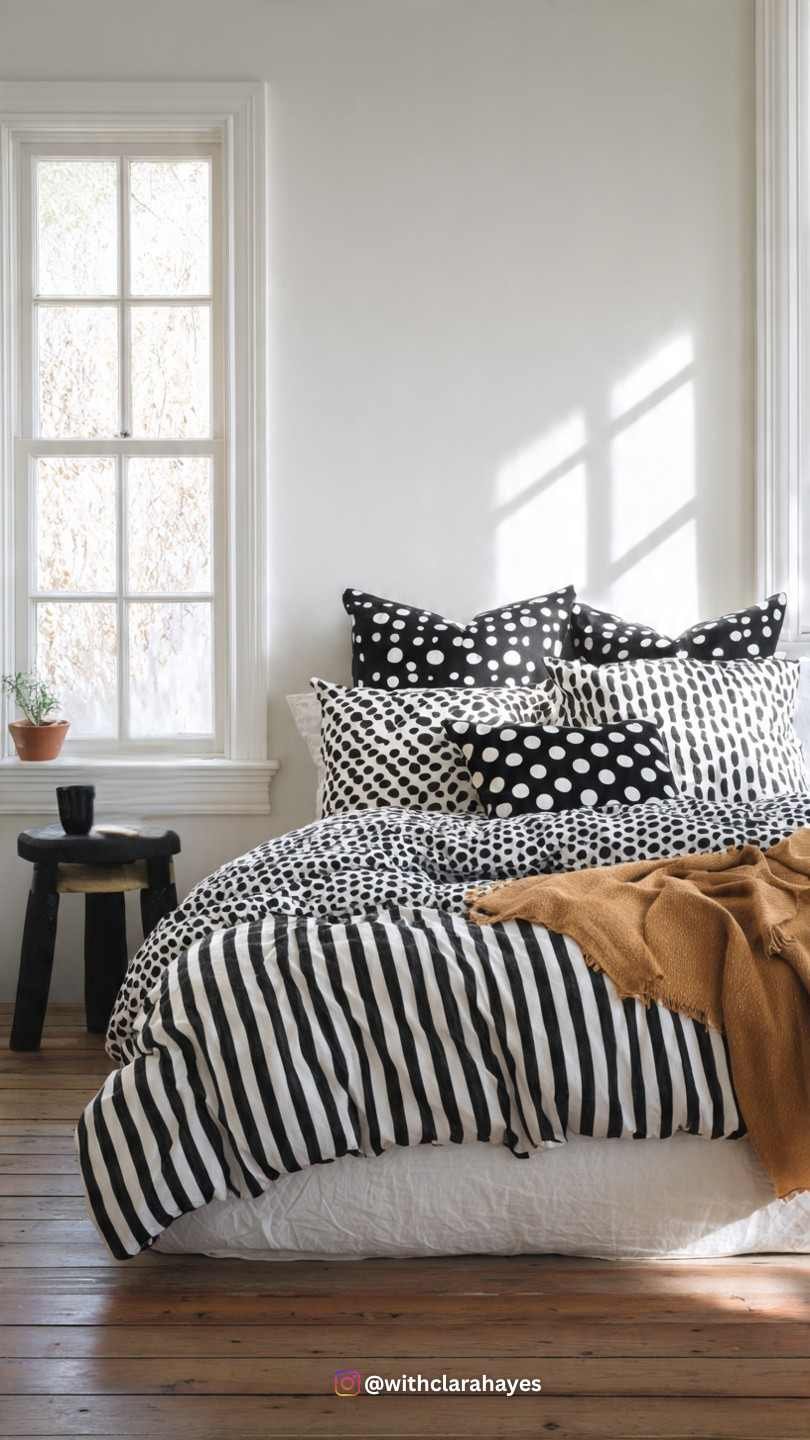
- The Look: Fun, energetic, and slightly playful, using contrasting prints for impact.
- Key Elements:
- The Mix: The bedding is where the patterns mix. Use a duvet cover with a bold black and white stripe and layer it with decorative pillows featuring a smaller pattern, like polka dots or a delicate trellis print.
- Balance: Keep the walls and floor entirely neutral to avoid visual chaos.
- Furniture: Simple, unadorned white or black furniture.
- Actionable Content: The key to mixing prints is scale. Ensure the stripe is large and the dot is small. Use a solid-colored throw (e.g., a warm grey or camel) to visually rest the eye.
10. High-Gloss Luxe
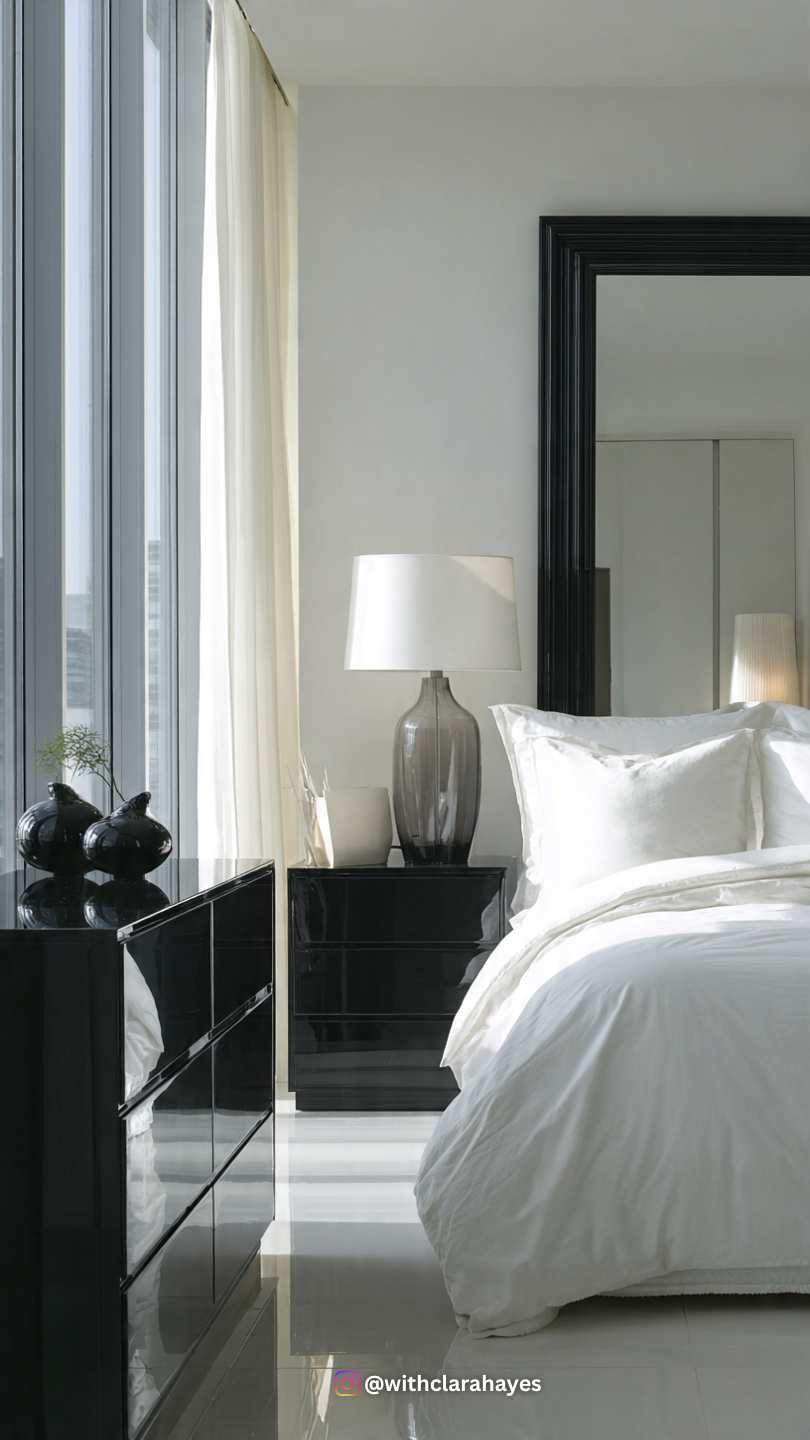
- The Look: Sleek, modern luxury focused on reflective surfaces and minimal clutter.
- Key Elements:
- Surfaces: Use high-gloss finishes. This can be achieved with black lacquered furniture (dresser, nightstands) or a polished concrete-look floor.
- Lighting: Introduce clear or slightly smoky glass elements in pendant lights or vases to reflect light throughout the room.
- Contrast: The bedding must be crisp, high-thread-count white cotton to emphasize the luxury feel.
- Styling Insight: Use a large, black-framed mirror (or a full-length leaning mirror) to enhance the feeling of space and light. The reflections created by the glossy surfaces prevent the black from feeling heavy.
Final Styling Checklist: Bringing the Monochrome to Life
To perfect any of these concepts, follow these crucial finishing steps that transform a well-designed room into a curated sanctuary.
Layered Lighting Strategy (Home Decor Essential)
- Ambient: General, soft overhead light (use warm bulbs, 2700K).
- Task: Bedside lamps (must be adjustable or focused for reading).
- Accent: LED strips under the bed or behind art to highlight textures and create a soft, inviting warm glow.
Incorporating the 5th Element (The Subtle Pop)
While the palette is B&W, almost every great monochrome room uses a small splash of a third, natural element to anchor the space.
- The Green: A tall, structural plant (like a Fiddle Leaf Fig or Snake Plant) placed in a simple white pot adds life and an organic curve that breaks up the strong, straight lines.
- The Metal: Brass, copper, or warm wood tones in small amounts (lamp bases, photo frames) provides the visual warmth needed to counter the cool contrast.
Sensory Comfort Check
Before finishing your design, ask yourself:
- Does the floor feel cold? Add a plush rug.
- Does the lighting feel harsh? Swap bulbs for lower Kelvin ratings.
- Does the bed feel inviting? Add one super-soft, contrasting texture (like a faux fur or velvet throw) to enhance the soft, yielding quality of the sleep space.
Mastering the black and white bedroom is an exercise in intentional design. By focusing on texture, balancing the ratio, and strategically layering light, you achieve a sophisticated aesthetic that is both dramatically stylish and profoundly comforting.
Which of these 10 concepts (Minimalist Zoning, Soft Scandi, or High-Gloss Luxe) sparks the most inspiration for your space? Share your favorite idea below!